

Hosted by:

Social Entrepreneurship Summit 2026
Entrepreneurship with Purpose, Advancing Theory
and Practice of Impact-Driven Enterprises
September 10-11 – Rome, Italy

Welcome to #SES2026
Hybrid conference
Deadline for abstracts: 20 May
-
Buy your ticket here
The Social Entrepreneurship Summit (SES) is an event that brings together individuals from various sectors such as academia, business, government, and social entrepreneurship to collaboratively address some of society’s most challenging issues. The summit aims to foster collaboration and provide hands-on support to social entrepreneurs and other ecosystem partners. SES is powered by ELANET, an international university centred ecosystem in support of social entrepreneurs.
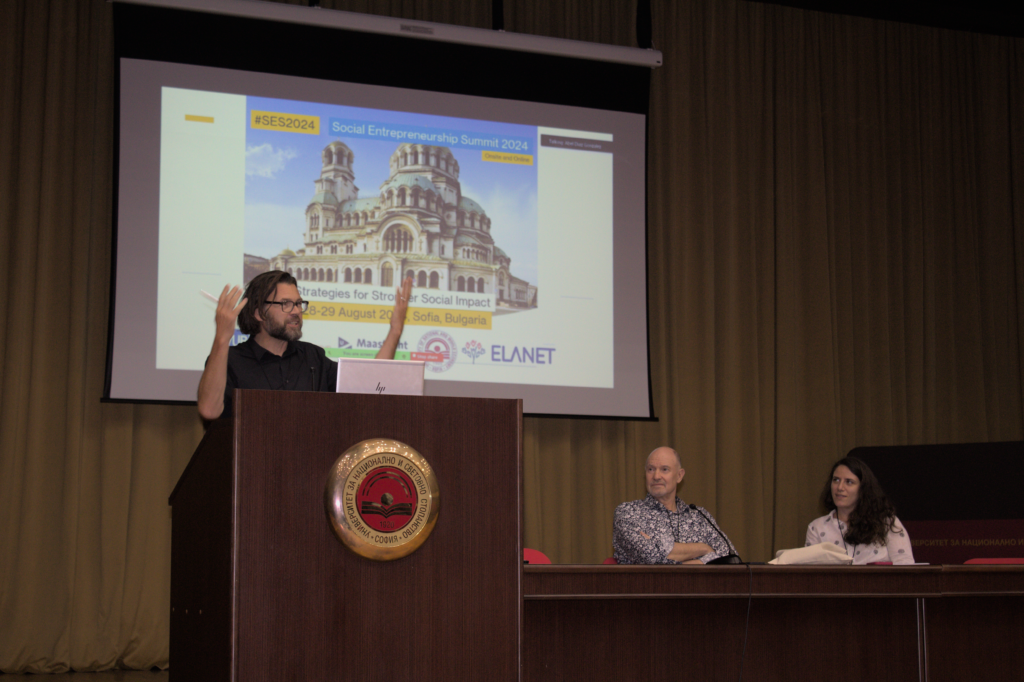
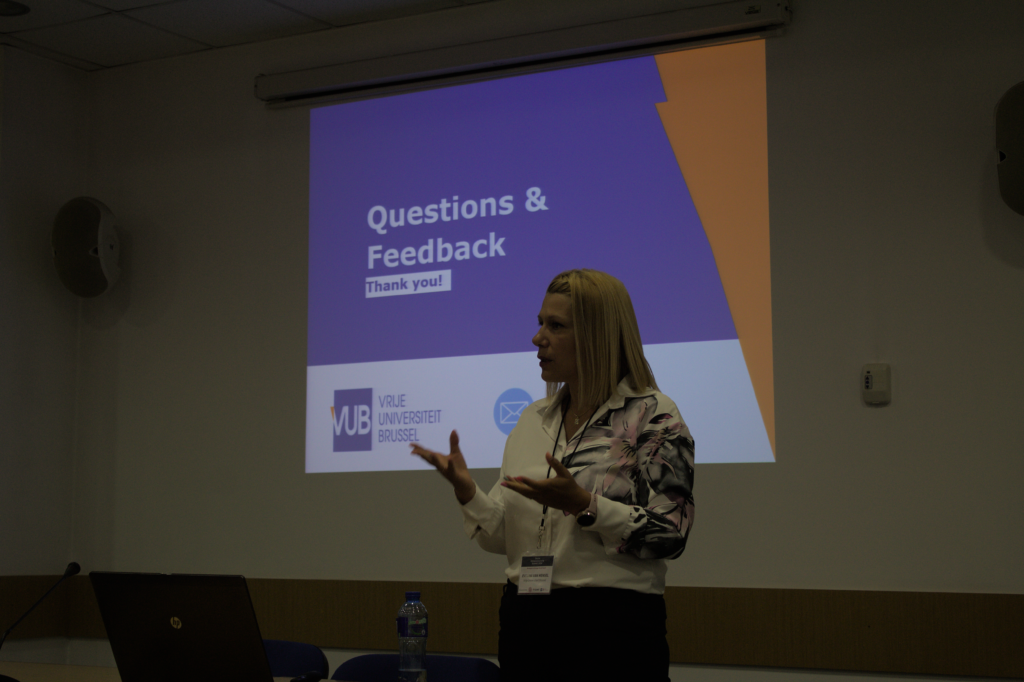
The 2026 Social Entrepreneurship Summit will be hosted by LUMSA University in Rome. After 7 successful editions, the summit has attracted the interest of over 1000 participants from around the world, including those attending in person and online. Our most recent summit was held in Barranquilla, Colombia with more than 100 participants attending from different countries in Europe, Asia, Africa, North and Latin America. Alongside the summit, we also host the Social Entrepreneurship Fair, a parallel event that provides local social entrepreneurs with an opportunity to showcase their projects, sell their products, exchange ideas with participants, and receive feedback on how to further develop their ventures while increasing their impact.
We are proud to present the SES2026 edition “Entrepreneurship with Purpose, Advancing Theory and Practice of Impact-Driven Enterprises”. We look forward to engaging with academics and practitioners in discussing different micro, meso, and macro-level elements, processes, resources, and actors required to design and implement suitable strategies to maximize social impact. In our current times, where we are facing the post covid global shock, and amidst several international conflicts, this topic has become quite relevant and sound. This summit will open the space for debating and constructing ideas on how to develop further ecosystems that can support more sustainable, resilient and longslasting business models of social enterprises.




Who can participate?
- – Researchers and academics with a focus on social entrepreneurship and related fields;
- – University leaders and professionals involved in international relations, outreach, and community engagement with an interest in the relationship between universities and local communities;
- – Students and professionals with an interest in social entrepreneurship and related fields;
- – Social entrepreneurs and business representatives working on projects with a social or environmental impact;
- – Investors, venture capitalists, and philanthropists interested in supporting social entrepreneurship ventures;
- – Business leaders and practitioners with connections to social entrepreneurship and corporate social responsibility;
- – Policymakers and government agencies involved in supporting social and environmental initiatives;
- – NGO’s and other organizations involved in social or environmental projects;
- – Leaders from incubators, accelerators, coworking spaces, and other innovation-focused organizations.
Main topics for submissions
- – New approaches to Social Entrepreneurship: Exploring new frameworks and paradigms;
- – Social Innovation and Societal Impact;
- – Ecosystems for Social Enterprises: governance, organization, strategies, policies;
- – Measuring Social Impact: Methodologies and tools for evaluating impact;
- – Cross-Sector Collaborations: Partnerships for social change, including public-private partnerships;
- – Policy and Social Entrepreneurship: Governmental strategies and regulatory environments;
- – Case Studies and Success Stories: Real-world examples of impactful strategies;
- – Technology and Social Innovation: Leveraging digital tools for social good including the new developments in Artificial intelligence;
- – Scaling and Sustainability: Approaches for growing social ventures sustainably;
- – Diversity, equity, and inclusion in social entrepreneurship;
- – Corporate social responsibility – CSR and social entrepreneurship;
- – Social entrepreneurship in rural and remote communities;
- – Social entrepreneurship and healthcare innovation;
- – Human-centered design in social entrepreneurship;
- – Ethics and values in social entrepreneurship.
This is not an exhaustive list of topics. Therefore, we will welcome any other submission on topics related to Social Entrepreneurship.
What can you expect from this summit?
By attending the Social Entrepreneurship Summit, you can expect to:
- – Gain inspiration from a range of presentations by academics, students, business leaders, government officials, social entrepreneurs, and other key stakeholders in the entrepreneurial ecosystem;
- – Build long-lasting connections and explore new avenues for creating sustainable solutions, drawing on the knowledge and experience of other participants;
- – Receive valuable feedback on your current social entrepreneurship projects and ideas, helping you to refine your approach and increase your impact.
- – Acquire new knowledge and skills to take your social entrepreneurship initiatives to the next level, with innovative and effective ideas for creating positive change in your community and beyond.
What are the participation styles?
– Academic Presentation: We welcome all types of scientific research, including literature reviews, conceptual papers, case studies, and qualitative/quantitative research.
– University Initiatives Presentation: Universities are invited to showcase their exemplary cases on how to support/stimulate social entrepreneurship through teaching, research, or outreach activities
– Practitioner’s Presentation: We welcome social enterprises, practitioners and government officials to share their ideas and experience on the topic, by presenting their cases, best practices and discuss their challenges with a broader audience to create awareness, establish new connections, and receive feedback;
– Round Table Debates: Proposals are welcome to open up debates on challenging topics in the support of social entrepreneurship.
Abstracts of 1,000 words are required for all submissions, which should mention one of the above types and elaborate on proposed ideas. Both English and Spanish presentations are welcome, with a clear presentation of preference. All submissions will be subject to peer review.
SES2025 A Hybrid Conference in two languages

Over the past years, we have been able to offer the possibility to participants to attend the summit online. This has made our event more accessible to participants who prefer(or can not) attend the event physically, opening the possibility to have within our communities attendees who would not have joined otherwise.
Our event is primarily in English. However, we also offer the possibility to run this conference in different languages depending on the selected city for the event. It has been the case (in previous editions) that this summit has offered the possibility to receive submissions in Spanish. In 2025, this summit will be:
* Onsite (English)
* Online (English and Spanish).
Important dates #SES2026
1000 word abstract Submission Deadline: May 20, 2026
Notification of selected authors: June 25, 2026
Registrations deadline for author: July 24, 2026
Summit Dates: 10 – 11 September, 2026
Tickets
Onsite Participation (dinner on the 10th included)
- General admission: 200 Eur
- Student: 120 Eur
- Social Entrepreneurs: 120 Eur
Online Participation
- General admission: 50 Eur
- Student: 30 Eur
- Social Entrepreneurs: 30 Eur
Please note that there will be no refunds in case you are registered for onsite participation but decide for whatever reason to participate online.

Submission platform
Submissions will be handled via the Easychair System. Please follow this link: https://easychair.org/conferences/?conf=ses26
Organising team
Chair: Chiara Ottolenghi
Email: c.ottolenghi@lumsa.it
Tel.: +39 3385687796
Gennaro Iasevoli
Email: iasevoli@lumsa.it
Laura Michelini
Email: l.michelini@lumsa.it
Valentina Cucino
Email: v.cucino@lumsa.it
Federico Frezzetti
Email: f.frezzetti.dottorati@lumsa.it
Bart Leyen
Email: bart.pierre.h.leyen@vub.be

Social Entrepreneurship Summit
Previous editions

Social Entrepreneurship Summit 2025
Social Entrepreneurship Summit 2025
Social Entrepreneurship Summit 2024
Social Entrepreneurship Summit 2024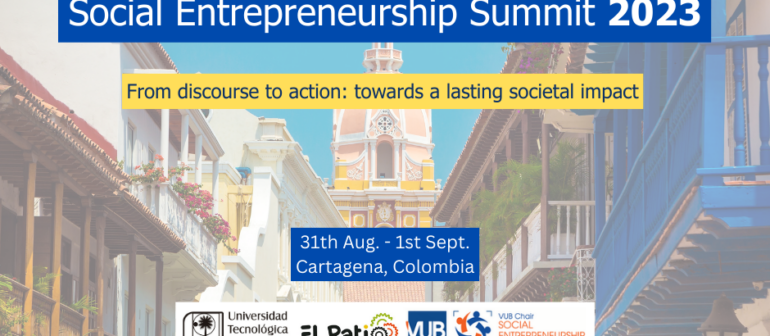
Social Entrepreneurship Summit 2023
Read more
Social Entrepreneurship Summit 2022
Read more
Social Entrepreneurship Summit 2021
Read more
Social Entrepreneurship Summit 2020
Read more